



Office Cleaning
Cleanliness in Office Premises Explained: Standards, Methods & Business Impact Compared
Maintaining cleanliness in office premises goes far beyond emptying bins and wiping desks. In Singapore, where businesses operate under strict regulatory oversight from the National Environment Agency (NEA) and the Ministry of Manpower (MOM), office cleanliness is a measurable standard with direct implications for employee health, productivity, and legal compliance. This guide explains what cleanliness in office premises truly means, how to benchmark it, and how to choose between in-house and professional cleaning solutions.
What Does Cleanliness in Office Premises Mean? A Comprehensive Definition
Cleanliness in office premises encompasses three layers: physical cleanliness (the absence of visible dirt, dust, and clutter), hygiene (the reduction of harmful bacteria and pathogens on surfaces), and sanitation (the systematic processes that maintain a safe indoor environment). Under Singapore’s Environmental Public Health Act, commercial premises must meet baseline hygiene standards enforced by the NEA.
Unlike residential cleaning, office cleanliness must account for high foot traffic, shared equipment, communal kitchens, and washroom facilities used by dozens of people daily. The distinction between visual cleanliness and microbiological cleanliness is critical: a desk may look clean but harbour bacterial colonies that exceed safe thresholds. Industry benchmarks such as ATP (Adenosine Triphosphate) testing provide objective, measurable data on surface hygiene levels, with readings below 100 RLU (Relative Light Units) for high-touch surfaces indicating proper sanitisation.
Cleanliness in Office Premises: Professional Standards vs. Basic Maintenance
Understanding the gap between basic maintenance and professional cleaning standards is essential for any business evaluating its current arrangements.
Basic Maintenance
- Daily surface wiping and visible dirt removal
- Ad-hoc cleaning when issues are reported
- General-purpose cleaning agents
- No documentation or verification testing
Professional Standards
- Systematic disinfection protocols targeting pathogens
- Scheduled deep cleaning cycles (weekly, monthly, quarterly)
- Hospital-grade or NEA-approved cleaning agents
- ATP verification testing and documented cleaning logs
The cost implications are significant. Basic maintenance appears cheaper in the short term, but businesses relying solely on ad-hoc cleaning face higher long-term costs through increased sick leave (up to 30% more absenteeism in poorly maintained offices), accelerated wear on furnishings and flooring, and potential non-compliance penalties. Professional cleaning extends asset lifespans by 40-60% and demonstrably reduces workplace illness rates.
Measuring Cleanliness in Office Premises: How Singapore Businesses Benchmark Standards
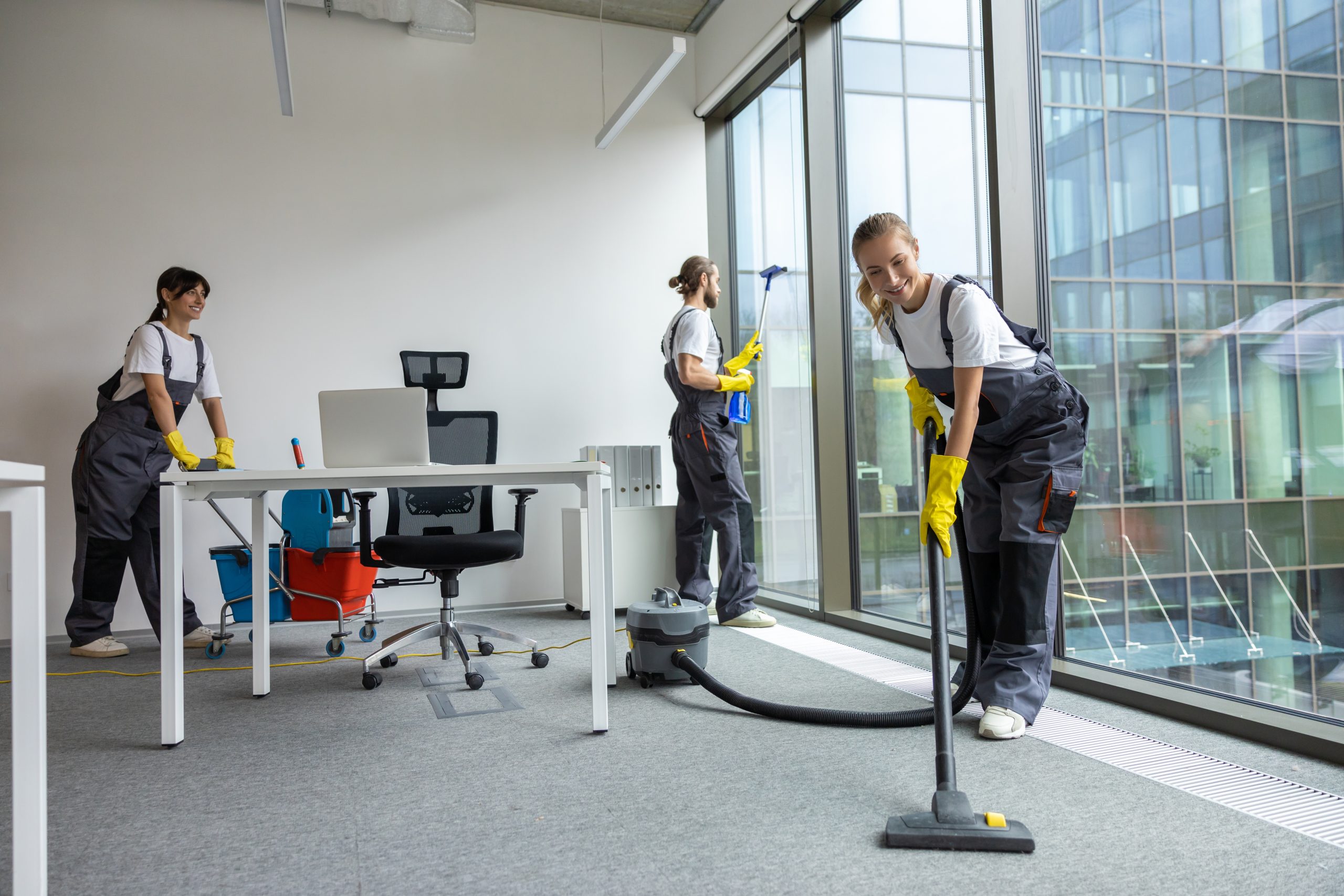
Singapore businesses increasingly adopt data-driven approaches to benchmark office cleanliness. ATP testing remains the gold standard for surface hygiene. A handheld device swabs a surface and returns a reading within seconds. Readings below 100 RLU indicate a properly sanitised surface; readings above 300 RLU signal inadequate cleaning.
Air quality monitoring is equally important. The NEA’s Indoor Air Quality (IAQ) guidelines recommend tracking PM2.5 particulates, volatile organic compounds (VOCs), and CO2 levels. Poor air quality in office premises has been linked to a 10-15% drop in cognitive performance.
Additional benchmarking methods include visual inspection scoring systems, employee satisfaction surveys, sick leave rate tracking correlated with cleaning schedule changes, and third-party audits. Businesses seeking certified office cleaning in Singapore often engage providers who include these verification services as standard.
Decision Framework: Achieving Optimal Cleanliness in Office Premises
Choosing the right cleaning approach depends on four key variables: office size, daily foot traffic, industry-specific requirements, and budget.
Small offices (under 2,000 sqft) with low traffic:
Basic daily cleaning with quarterly deep cleans may suffice. Consider a scheduled professional service two to three times per week.
Medium offices (2,000-8,000 sqft) with moderate traffic:
Daily professional cleaning is recommended. Include monthly deep cleaning for carpets, upholstery, and air-conditioning vents. ATP spot-checks should be conducted quarterly.
Large offices or regulated industries (8,000+ sqft):
Full-time professional cleaning with dedicated on-site teams. Weekly deep cleaning rotations, real-time air quality monitoring, and documented compliance reporting are standard requirements. Industries such as healthcare and food processing may require specialised protocols.
Cleanliness in Office Premises: In-House vs. Outsourced Solutions Compared
In-House Cleaning
- Direct control over schedules and priorities
- Requires recruitment, CPF contributions, training, equipment purchase, and chemical procurement
- Quality depends entirely on individual staff capability
- Business assumes full liability for workplace safety compliance
Outsourced Professional Cleaning
- Provider handles recruitment, training, equipment, and compliance
- Service-level agreements (SLAs) guarantee consistent quality
- Scalable – easy to increase or reduce scope as needs change
- Provider carries liability insurance and maintains NEA certifications
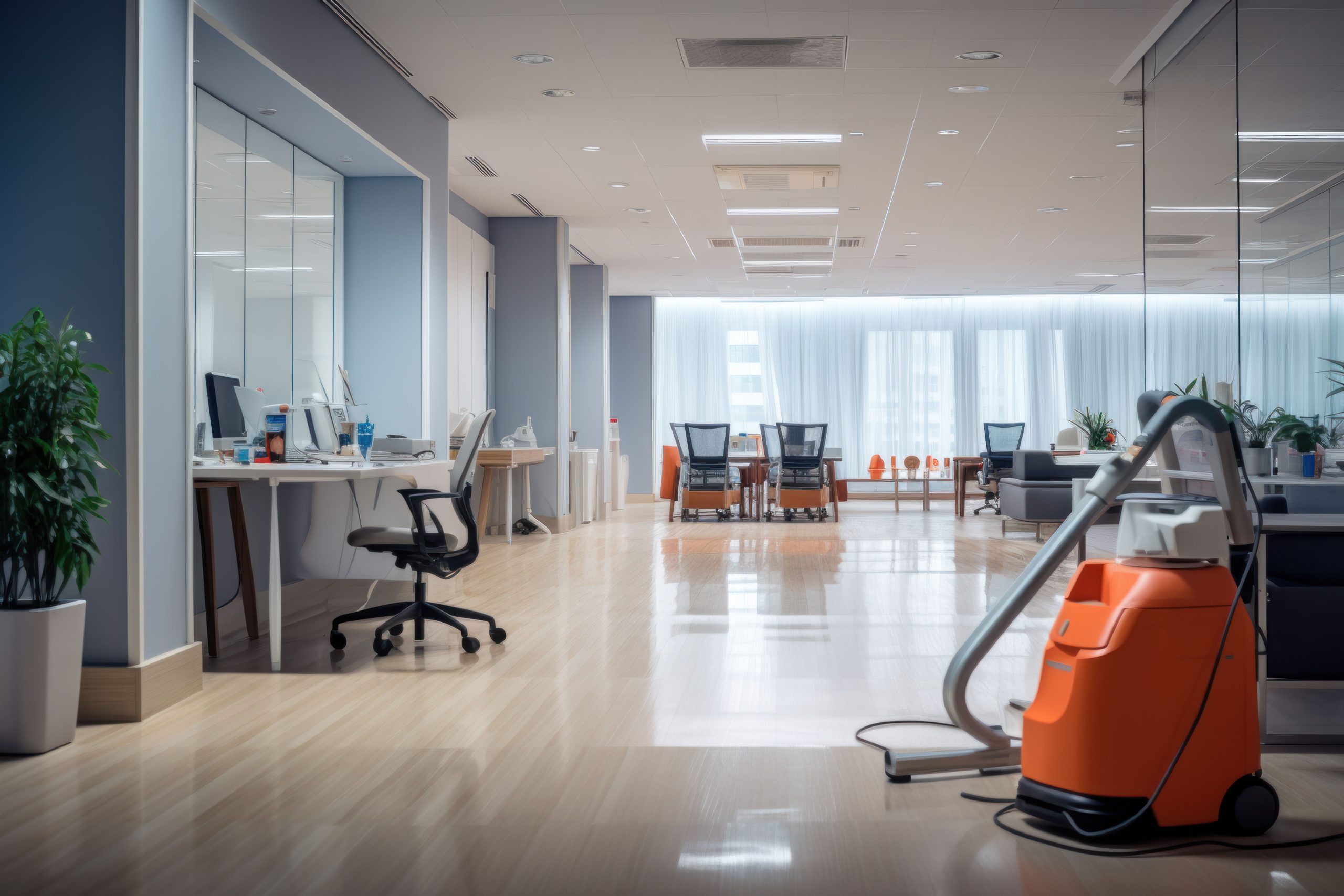
For offices under 3,000 sqft, the break-even point typically favours outsourcing once hidden costs (CPF, equipment depreciation, cleaning supplies, supervision time) are factored in. Larger offices may benefit from a hybrid model with a small in-house team supplemented by professional office cleaning services on a scheduled basis.
If you are evaluating your current arrangement or considering a switch to professional services, you can request a cleaning assessment from Peniel Cleaning to receive a tailored recommendation based on your office size, industry, and budget.
Cleanliness in Office Premises: Making the Right Decision for Your Business
Cleanliness in office premises is not simply a matter of appearances — it is a measurable operational standard with direct consequences for employee health, regulatory compliance, and long-term business costs. Whether you manage a compact office in the CBD or a multi-floor corporate headquarters, the gap between basic maintenance and professional cleaning standards is significant and quantifiable. Singapore’s regulatory framework under the NEA and MOM sets a clear baseline, but high-performing businesses go further, using ATP testing, air quality monitoring, and documented protocols to protect their people and their assets.
The most effective approach is not the same for every organisation. What matters is making an informed decision based on your office size, foot traffic, industry requirements, and total cost of ownership — not just the line item on a cleaning invoice. By benchmarking your current standards against the frameworks outlined in this guide, you are already taking the first step toward a healthier, more compliant, and more productive workplace.
If you are unsure where your office currently stands, a professional cleaning assessment from Peniel Cleaning can provide a clear picture and a practical path forward.
Frequently Asked Questions
What does cleanliness in office premises mean?
Cleanliness in office premises refers to the systematic maintenance of physical tidiness, surface hygiene, and indoor air quality within a workplace. It extends beyond visible cleanliness to include microbiological standards, measured through tools like ATP testing. In Singapore, office cleanliness must comply with NEA and MOM guidelines.
What are the cleanliness standards for office premises in Singapore?
Singapore’s cleanliness standards are governed by the NEA’s Environmental Public Health Act and MOM’s Workplace Safety and Health Act. Key benchmarks include ATP surface readings below 100 RLU, indoor air quality within BCA guidelines, and regular documented cleaning schedules.
How often should office premises be professionally cleaned?
Most Singapore offices benefit from daily professional cleaning for common areas and high-touch surfaces, with deep cleaning scheduled monthly or quarterly depending on foot traffic and industry requirements.
What happens if office cleanliness standards are not maintained?
Failure to maintain cleanliness in office premises can lead to NEA enforcement action, increased employee sick leave, reduced productivity, higher staff turnover, and reputational damage. In regulated industries, it may result in licence suspension.
Can cleanliness standards be customised by industry?
Yes. Professional office cleaning services in Singapore routinely customise protocols by industry. Healthcare offices require hospital-grade disinfection, tech companies need ESD-safe cleaning, and F&B offices must meet SFA food safety standards.
What is ATP testing and why does it matter for office hygiene?
ATP testing measures biological residue on surfaces using a handheld luminometer. It provides an objective, numerical reading of surface cleanliness within seconds, verifying that cleaning has achieved microbiological standards rather than just visual tidiness.
Is it better to outsource office cleaning in Singapore?
For most Singapore offices, outsourcing is more cost-effective once hidden costs are included (CPF, equipment, training, supervision). Outsourced providers carry liability insurance and maintain NEA certifications. Get a free quote from Peniel Cleaning to compare.
