



Industrial Cleaning
How Industrial Deep Cleaning Prevents Costly Shutdowns: A Technical Guide for Singapore Facilities
Unplanned production shutdowns cost Singapore’s industrial sector millions every year, and industrial deep cleaning services play a critical role in preventing them. In many cases, the root cause of these shutdowns traces back to contamination, residue build-up, or hygiene failures that proper deep cleaning would have caught early. For facility managers and plant operators, understanding the direct link between cleaning rigour and production uptime is essential.
Production efficiency and cleanliness are directly correlated in industrial environments. Accumulated dust, grease, chemical residues, and biological contaminants compromise equipment performance, product quality, and worker safety. The Ministry of Manpower reports that many workplace incidents in industrial settings involve environmental factors that routine cleaning alone cannot address.
How Is Industrial Deep Cleaning Different from Standard Industrial Cleaning?
This is one of the most common questions facility managers ask, and the distinction is significant. Standard industrial cleaning, performed by industrial janitorial services providers, addresses surface-level cleanliness such as sweeping floors, emptying bins, and wiping surfaces. Industrial deep cleaning targets the embedded contamination that standard methods miss. The differences span five key dimensions:
- Frequency: Standard cleaning is daily or weekly. Deep cleaning is quarterly, semi-annual, or aligned with planned shutdown schedules
- Chemicals: Standard cleaning uses general-purpose detergents. Deep cleaning employs industrial-strength degreasers, specialised solvents, and sector-specific sanitisers
- Equipment: Standard cleaning uses mops and basic vacuums. Deep cleaning requires high-pressure washers rated at 3,000 PSI or higher, HEPA-filtered extraction systems, and confined space entry equipment
- Certifications: Standard cleaning staff need basic training. Deep cleaning teams require confined space entry certification, working at heights licences, and chemical handling qualifications
- Documentation: Standard cleaning uses basic checklists. Deep cleaning produces comprehensive reports with photographic evidence, ATP testing results, and compliance certificates
As former Prime Minister Lee Kuan Yew once said, “If you deprive yourself of outsourcing and your competitors do not, you are putting yourself at a competitive disadvantage.” For industrial facilities, outsourcing deep cleaning to certified specialists is not a luxury but a strategic necessity.
Deep Cleaning Protocols for Different Industrial Sectors in Singapore
Each sector demands a tailored approach to deep cleaning, shaped by its regulatory framework and contamination risks.
For food manufacturing facilities operating under SFA compliance, deep cleaning involves full disassembly cleaning of production lines, CIP system verification, allergen removal protocols, and microbiological testing. Every procedure must satisfy SFA audit requirements.
Pharmaceutical cleanrooms governed by GMP standards require particle count verification, validated cleaning procedures documented per GMP requirements, non-shedding materials only, and environmental monitoring before and after cleaning.
Electronics manufacturing calls for ESD-safe procedures throughout. This means electrostatic discharge prevention, ionised air systems, anti-static cleaning solutions, and particle count verification for cleanroom-adjacent areas.
Petrochemical plants with classified ATEX zones demand explosion-proof equipment as standard. Procedures include hydrocarbon residue removal, tank and vessel cleaning, and gas-free certification before re-entry.
Logistics and warehousing facilities require floor coating maintenance, racking system cleaning, dock area degreasing, and pest prevention treatments. Deep cleaning extends equipment lifespan and preserves safety markings.
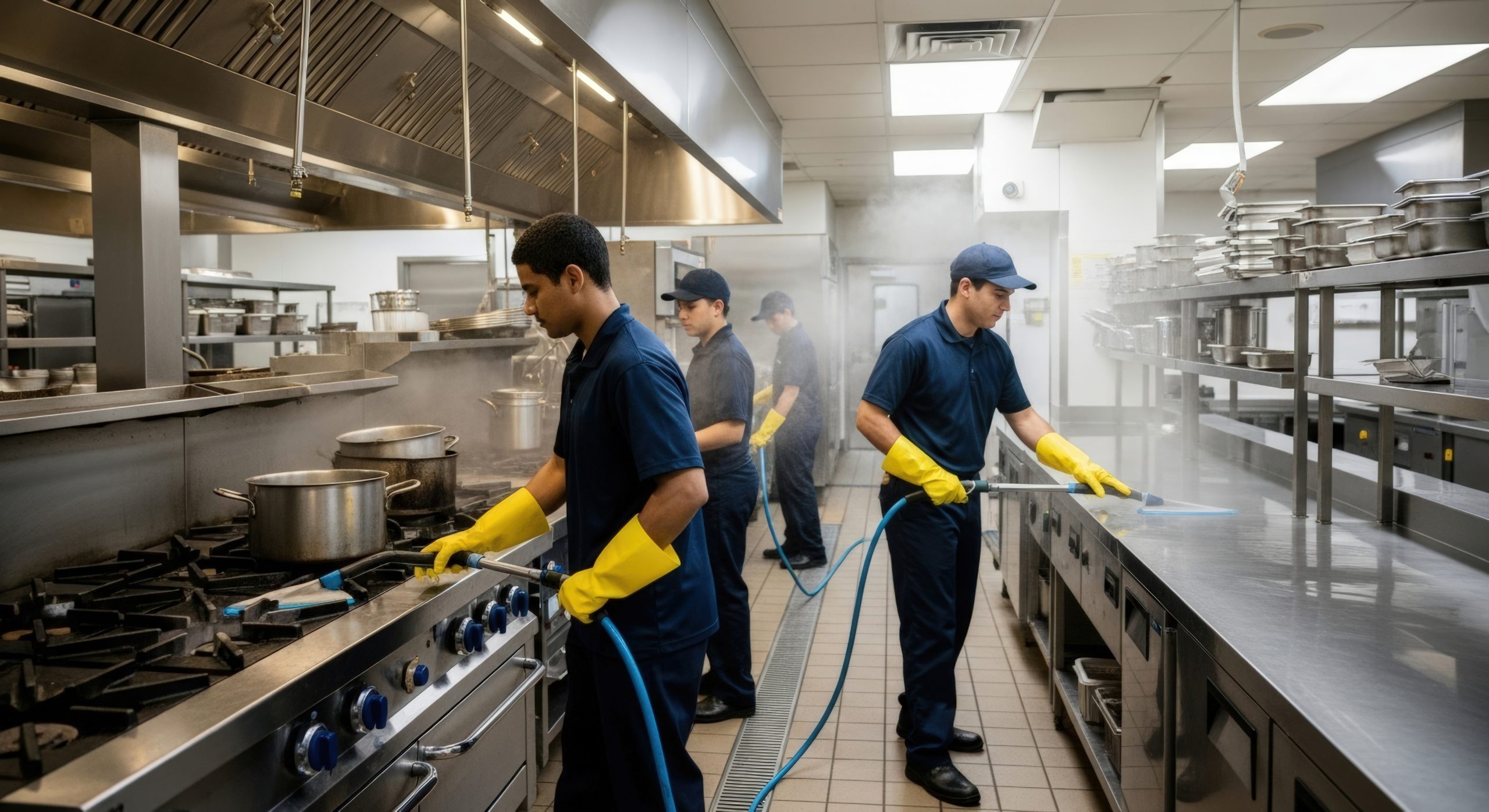
The 5-Stage Industrial Deep Cleaning Process
A structured process ensures thorough results and minimises risk at every step.
Stage 1 involves a pre-cleaning assessment and contamination mapping.
A thorough site survey identifies contamination hotspots, chemical compatibility requirements, safety risks, and access logistics. This produces a detailed scope of work with a clear timeline.
Stage 2 focuses on specialised degreasing and chemical application.
Industrial-strength degreasers and sector-specific chemicals are applied to target areas, with dwell times carefully managed to maximise effectiveness without damaging surfaces.
Stage 3 covers high-pressure and mechanical cleaning.
High-pressure washers, steam cleaning systems, and automated scrubbers remove loosened contaminants. Pressure ratings are matched to surface tolerances to prevent damage.
Stage 4 is sanitisation and verification testing.
Post-cleaning sanitisation uses approved disinfectants. ATP testing verifies surface hygiene levels, and air quality measurements confirm particulate levels meet required standards.
Stage 5 delivers post-cleaning documentation and certification.
Comprehensive reports include photographic records, ATP results, chemical usage logs, and compliance certificates for your audit files.
Scheduling Deep Cleaning to Minimise Production Impact
The most effective approach coordinates deep cleaning with planned maintenance shutdowns. Experienced providers of industrial cleaning services Singapore facilities trust work closely with your maintenance team to compress timelines and minimise production losses. Following bizSAFE protocols ensures that cleaning activities do not introduce additional safety risks during shutdown periods.
For facilities that cannot afford extended downtime, phased cleaning approaches allow sections of the plant to be cleaned while other areas remain operational. Emergency deep cleaning protocols are also available for unplanned contamination events, with leading providers offering response times of 2 to 4 hours.
The ROI of Industrial Deep Cleaning Services in Singapore: Costs vs. Risks
Understanding the true cost picture is essential for budget-conscious decision makers. Typical cost factors include facility size, sector-specific requirements, cleaning frequency, access complexity, and chemical disposal needs. Routine industrial cleaning ranges from $0.80 to $2.50 per sqm, while deep cleaning costs $2 to $8 per sqm depending on scope and sector.
The cost of not deep cleaning is substantially higher. MOM penalties for workplace safety violations can reach $500,000. NEA penalties for hygiene breaches range from $2,000 to $50,000 per offence. SFA can suspend food manufacturing licences entirely. Equipment failure from contamination build-up can cost between $50,000 and $500,000 per incident in repairs and lost production.
When framed as a capital protection expense rather than overhead, industrial deep cleaning delivers measurable returns within a single cycle. For a tailored assessment and transparent quote, contact Peniel Cleaning’s industrial services team.
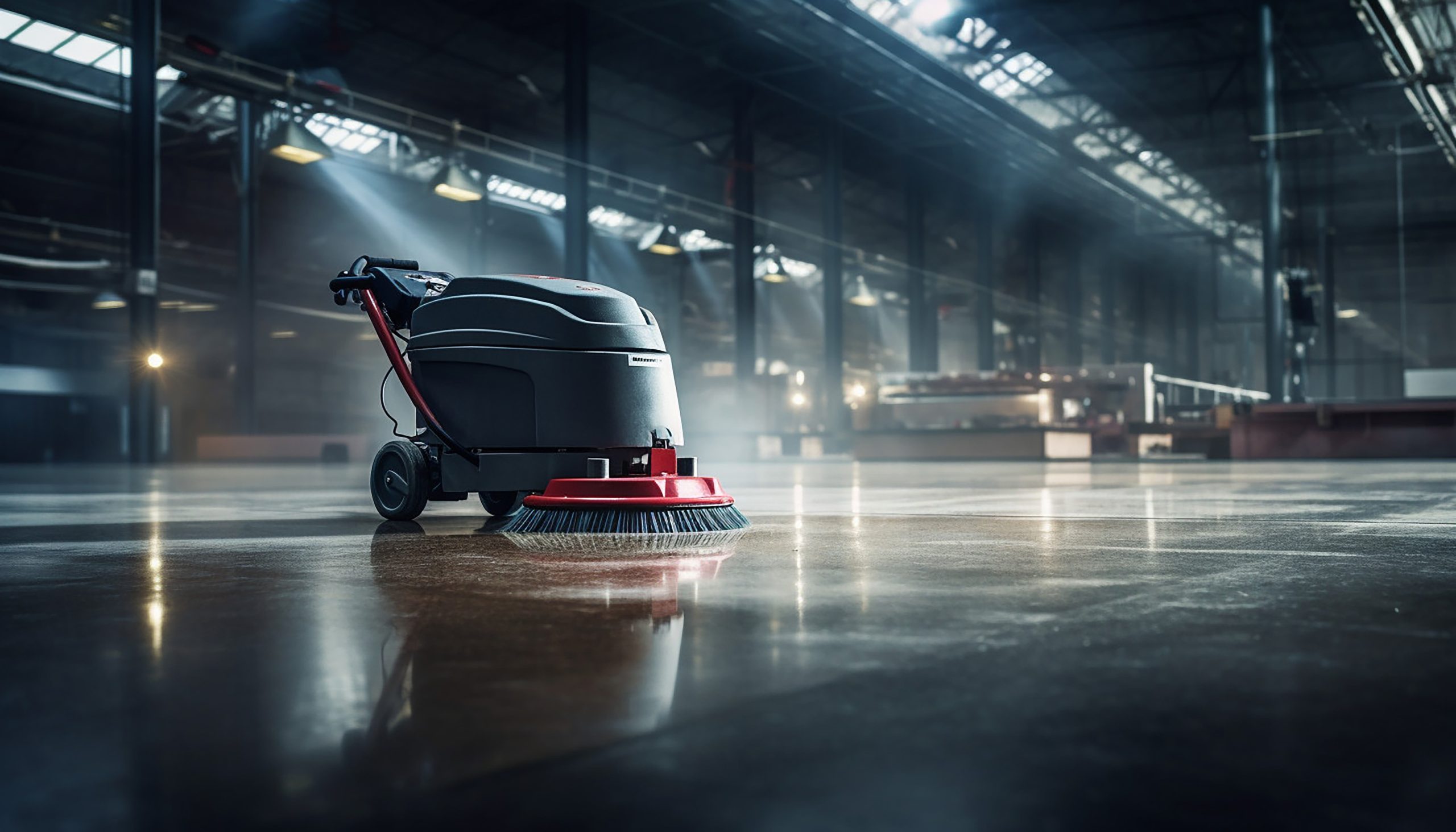
Industrial Deep Cleaning Is Not Maintenance — It Is Risk Management
For Singapore facility managers, the calculus is straightforward: the cost of a structured industrial deep cleaning programme is measured in thousands of dollars, while the cost of the problems it prevents — unplanned shutdowns, equipment failures, regulatory penalties, and licence suspensions — is measured in hundreds of thousands. Every stage of the deep cleaning process, from contamination mapping to ATP verification and compliance documentation, exists to protect your facility’s most valuable assets: its production uptime, its regulatory standing, and its people.
The distinction between standard industrial cleaning and true deep cleaning is not a matter of degree — it is a matter of capability, certification, and consequence. A provider without confined space entry certification, sector-specific chemical knowledge, and validated procedures is not equipped to protect your facility at the level Singapore’s regulatory environment demands. Cutting corners on deep cleaning does not reduce costs; it defers them, with interest.
Facilities that treat deep cleaning as a scheduled capital protection activity — aligned with planned shutdowns, documented for audit readiness, and executed by certified specialists — consistently outperform those that respond reactively. The question for every facility manager is not whether deep cleaning is worth the investment, but whether your current programme is rigorous enough to keep pace with the risks your environment generates.
To find out where your facility stands and what a tailored deep cleaning programme would look like, contact Peniel Cleaning’s industrial services team for an on-site assessment.
Frequently Asked Questions
How often should industrial facilities undergo deep cleaning?
Most industrial facilities in Singapore should schedule deep cleaning quarterly. High-risk sectors such as food manufacturing and pharmaceuticals may require monthly deep cleans. The optimal frequency depends on contamination rates, regulatory requirements, and production schedules.
What is the typical downtime required for industrial deep cleaning?
A 5,000 sqft production area typically requires 8 to 16 hours for comprehensive deep cleaning. Larger facilities or multi-zone operations may need 2 to 3 days. Experienced providers work in stages to maintain partial operations where possible.
Can deep cleaning be done during production hours?
Limited deep cleaning can occur in non-production zones. Full deep cleaning of production areas typically requires shutdown to ensure worker safety, prevent contamination, and allow proper chemical dwell times.
How do industrial janitorial services differ from regular cleaning services?
Industrial janitorial services use commercial-grade equipment, industrial-strength chemicals, and trained staff familiar with manufacturing hazards. Regular cleaning services lack the equipment, chemicals, and certifications needed for industrial environments.
What are the costs and benefits of industrial cleaning services in Singapore?
Routine maintenance ranges from $0.80 to $2.50 per sqm. Deep cleaning costs $2 to $8 per sqm. Benefits include extended equipment lifespan, regulatory compliance, reduced unplanned shutdowns, and documented audit readiness. Investing in industrial deep cleaning services protects your facility from costly disruptions and keeps operations running at peak performance.
